An Explanation of the Holy Mass
Eucharistic Prayer 1
An Explanation of the Holy Mass
Eucharistic Prayer 1
The Eucharistic Prayer
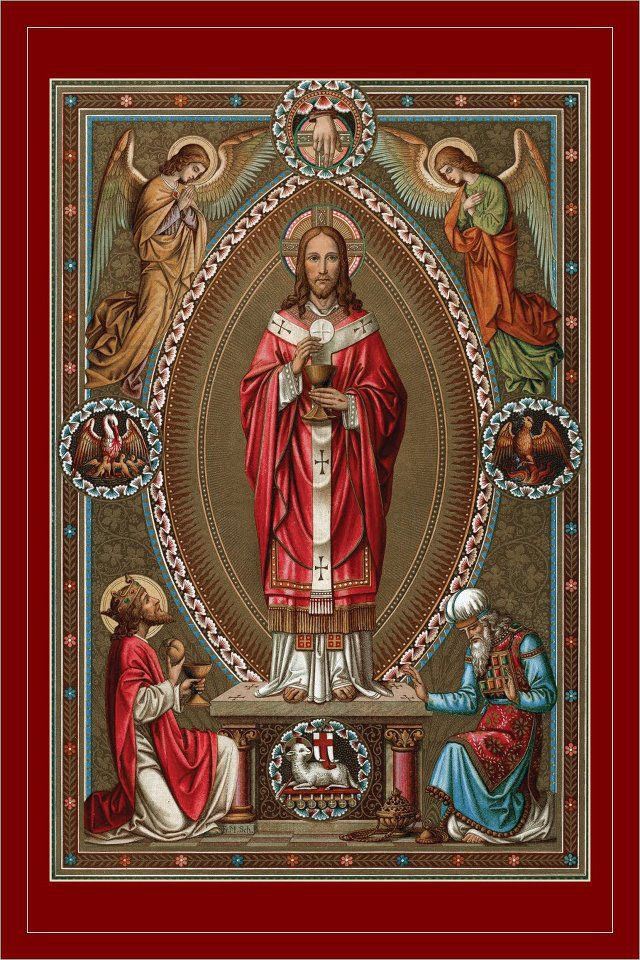
Following the Sanctus (Holy, Holy) is the heart of the mass, the Eucharistic Prayer. Historically, the first Eucharistic Prayer, also known as the Roman Canon, was the only Eucharistic Prayer that was used in the Latin Mass before the Second Vatican Council. Eucharistic Prayers Two, Three, and Four were written after the Second Vatican Council. The Second Eucharistic Prayer is based on a Eucharistic Prayer from the third or fourth century. It can be used at Sunday mass, but it was written with weekday masses in mind. The Third Eucharistic Prayer is the one that many priests use most of the time on Sundays; it also works well on the feast days of saints. The Fourth Eucharistic Prayer is based on a fourth-century prayer. The two Eucharistic Prayers for masses of reconciliation were written in 1975, and are used normally during Lent. Even though each of the Eucharistic Prayers are different, they all follow the same outline, they all contain each of the required elements of a Eucharistic Prayer, and are all required to use the same words for the consecration. The words that Jesus used at the Last Supper are prayed so that the bread and wine will become the Body and Blood of our Lord Jesus Christ. We have to use his words.
After the prayers of consecration, we have the Memorial Acclamation. The acclamations are prayers to Jesus, not statements about him.
Each Eucharistic Prayer ends with the Doxology: “Through him, and with him, and in him, O God, almighty Father, in the unity of the Holy Spirit, all glory and honor is yours, forever and ever.” Your response is “Amen.” Amen is a Hebrew word that means, “So be it,” or “I believe.” The priest has just finished praying a prayer that is at the heart of the mass, so it is your opportunity to say, “I’m in full agreement with everything the priest just prayed.” Rather than saying all that, the “Amen” suffices