What is the Feast of Divine Mercy?
The Feast of Divine Mercy has it's roots in the ancient Jewish feast, Yom Kippur, or The Day of Atonement.
After a period of repentance and mortification (much like Lent), the priest of the Lord offered a sacrifice for the sins
of the people. Placing his hands on a goat (scape goat), the goat was then released in the desert thus carrying away their
sins (See Leviticus: Chapters 16 & 23). It was the one day of the year when sins were forgiven.
The Feast of Divine Mercy recovers and expands this liturgical tradition in light of Jesus' sacrifice on
the Cross, in light of His Passion, Death, and Resurrection. St. Augustine called the Octave of Easter “the days of mercy and pardon.” He referred
specifically to the Octave Day (Divine Mercy Sunday) as “the compendium of the days of
mercy.” This is reflected in the liturgical
texts for Divine Mercy Sunday which describe the institution of the Sacrament of Reconciliation.
In the 1930's, speaking to a polish nun (St. Faustina), Jesus commanded that the Feast of Divine Mercy be
celebrated on the Octave Sunday (1st Sunday after Easter). He said, “My daughter, tell the whole
world about My Inconceivable Mercy. I desire that the Feast of Mercy be a refuge and shelter for all souls, and especially
for poor sinners. On that day the very depths of My tender mercy are open. I pour out a whole ocean of graces upon those
souls who approach the fount of My Mercy. The soul that will go to Confession and receive Holy Communion shall obtain
complete forgiveness of sins and punishment." )
The essential components of the feast are:
- Celebrate the feast on the first Sunday after Easter.
- Sincerely repent of all our sins
- Receive absolution in the Sacrament of Reconciliation)
- Receive Holy Communion on the day of the Feast
- Solemnly bless the Image of Divine Mercy
- Venerate the Image of Divine Mercy
- Pray the Chaplet of Divine Mercy
- Place complete trust in Jesus
- Be merciful in action, word, and prayer.
This Feast, which had already been granted to the nation of Poland and been celebrated within Vatican City,
was granted to the Universal Church by Pope John Paul II on the occasion of the canonization of Sr. Faustina
on 30 April 2000. In a decree dated 23 May 2000, the Congregation for Divine Worship and the Discipline of
the Sacraments stated that "throughout the world the Second Sunday of Easter will
receive the name Divine Mercy Sunday”.
Jesus further commanded Faustina to commission a painting of Himself depicting the graces He desires to
impart on the whole world. He said, “I want the image solemnly blessed on the
first Sunday after Easter, and I want it to be venerated publicly so that every soul may know about
it.” Jesus' command liturgically bookends His Resurrection. On Good Friday we venerate the Cross
of His Sacrifice, and on Divine Mercy Sunday we venerate the Image of Mercy and celebrate His infinite
compassion.
Jesus told St. Faustina, “On that day all the divine floodgates through which
grace flow are opened. Let no soul fear to draw near to Me, even though its sins be as scarlet. My mercy
is so great that no mind, be it of man or of angel, will be able to fathom it throughout all eternity.
Everything that exists has come forth from the very depths of My most tender mercy. Every soul in its
relation to Me will contemplate My love and mercy throughout eternity. The Feast of Mercy emerged from
My very depths of tenderness. (139) It is My desire that it be solemnly celebrated on the first Sunday
after Easter. Mankind will not have peace until it turns to the Fount of My
Mercy”
Importance of the Feast
The first revelation of Jesus in His message of Divine Mercy to St. Faustina on 22nd February 1931 was to
say how much He desired mankind to avail of the infinite mercy of God on earth and this was why He was establishing the
Feast of His Mercy. So, the Feast of Mercy was the first revelation in the message of Divine Mercy and is considered the
first and most important element of the whole devotion.
Jesus devoted fourteen revelations in all, more than He devoted to any other element of this devotion
because of the importance of the extraordinary graces He desired to give to all souls on this holy day.
In fact, He attached such importance to the Feast of Mercy that in the 43rd revelation, He stated, “I
desire that My mercy be worshiped, and I am giving mankind the last hope of salvation; that is, recourse to My mercy.
My Heart rejoices in this Feast”. (Diary 998)
First Sunday After Easter
Jesus said it was to be celebrated on the first Sunday after Easter. The selection of this day was to
indicate that Jesus shows a special close connection between the paschal mystery of our redemption, and the Feast of Mercy
and it is partly designed so that we contemplate, on this day, the mystery of our Redemption as the greatest act of Divine
Mercy toward mankind.
Saint Faustina also noted this, when in 1935 she wrote: "I see now that the work of
Redemption is bound up with this work of Divine Mercy that the Lord desires".(Diary 89)
Celebration of the Feast
With regard to the manner of its celebration, Jesus expressed a number of wishes. Firstly, that the
Image of Divine Mercy to be ceremoniously blessed and publicly venerated on the Feast of Mercy. (Diary 49, 341)
Jesus requires not only that the subject of sermons on the Feast of Mercy be on His divine and infinite
mercy, but also the unimaginable mercy of His human heart, which is shown above all, in His Passion and death on the cross
for He wants that the Feast of Mercy to “a refuge and shelter for all souls, and especially for poor sinners”.
(Diary 699)
The priest will be able to do justice to this assignment, only if he manages to show the faithful the
inconceivable love and mercy of Jesus, both in His Passion and in the entire work of Redemption.
A Second Baptism
Jesus said, "The soul that will go to confession in preparation for this day and receive Holy Communion
on the day, shall obtain complete forgiveness of sins and punishment" (Diary 699) What exactly does this mean? Canon Rozycki,
who was appointed by the Pope John Paul II to analyse the promises of Our Lord in the revelations of Divine Mercy states,
“The extraordinary grace promised by Jesus in connection with the Feast of Mercy is something greater by far than a plenary
indulgence. A plenary indulgence consists only in the forgiveness of temporal punishment due to sins already forgiven;
it is never the forgiveness of sins themselves”.
He also went on to say, “The remarkable grace promised by our Lord on the Feast of Mercy is the same as a
second Baptism. Now the Sacramental grace of Baptism if received by an adult, is not only the removal of original sin
from their soul, but also the removal of all personal sins committed since birth, and any punishment due to them”.
So the soul who receives this special grace on the Feast of Mercy is the same as an adult who is baptised
for the first time and receives the grace of having their soul cleansed through the sacrament of Baptism.
Confession in Preparation
According to Canon Rozycki, this grace takes place when you receive Holy Communion on the Feast of Mercy,
provided that you have made a good confession in preparation and that your soul is in a state of grace.
But it is obvious that in order to receive this extraordinary grace, the confession you make in
preparation for the Feast of Mercy must not only be a good one, but in fact, must also be the expression of the
fulfilment of the basic requirement of the Divine Mercy devotion. You must have full trust in God’s mercy, you must
have repentance, you must make atonement where necessary and you must forgive all others who have offended you.
If confession is just some kind of performance and not accompanied by trust in God’s Mercy, repentance,
atonement, and forgiveness, instead of drawing Divine Mercy, could draw Divine Wrath upon the head of the participant,
because it would then be a complete contradiction of Devotion to the Divine Mercy.
Telling Others about the Feast
Jesus requests also from us, that if we know what great graces are offered on the Feast of Mercy and
the conditions they can be obtained under, then there is an onus on us to make this known, to the best of our ability,
and to seek to provide for the spiritual good of others.
Jesus said, “I yearn for souls, My daughter. On the day of My feast, the Feast of Mercy, you will
go through the whole world and bring fainting souls to the spring of my mercy. I shall heal and strengthen them”.
(Diary 206)
Jesus said, "On this day the very depths of My tender mercy are open; I pour out a whole ocean of
graces upon those souls who will approach the fount of My mercy on this day. On this day all the divine floodgates
through which graces flow are opened. Therefore, Let no soul fear to draw near to Me, even though its sins be as
scarlet" (Diary 699)
The Feast of Mercy is the most important day of the year within the devotion to Divine Mercy. Jesus
offers us extraordinary graces on this special holy day, a new feast day within the church. It is akin to a second
baptism and a complete cleansing of our souls, a grace we will probably never fully comprehend. We must take
seriously the conditions for receiving the graces offered to us on the Feast of Mercy and make every effort to meet
the requirements for receiving these unfathomable graces on the Feast of Mercy. We must remember that the Feast of
Mercy is a gift from God to mankind and He wishes everyone to avail of His mercy so that all will be saved. We
should be immensely grateful to Jesus for the kindness and goodness He shows us on this truly unique and special
Feast of God’s infinite mercy.
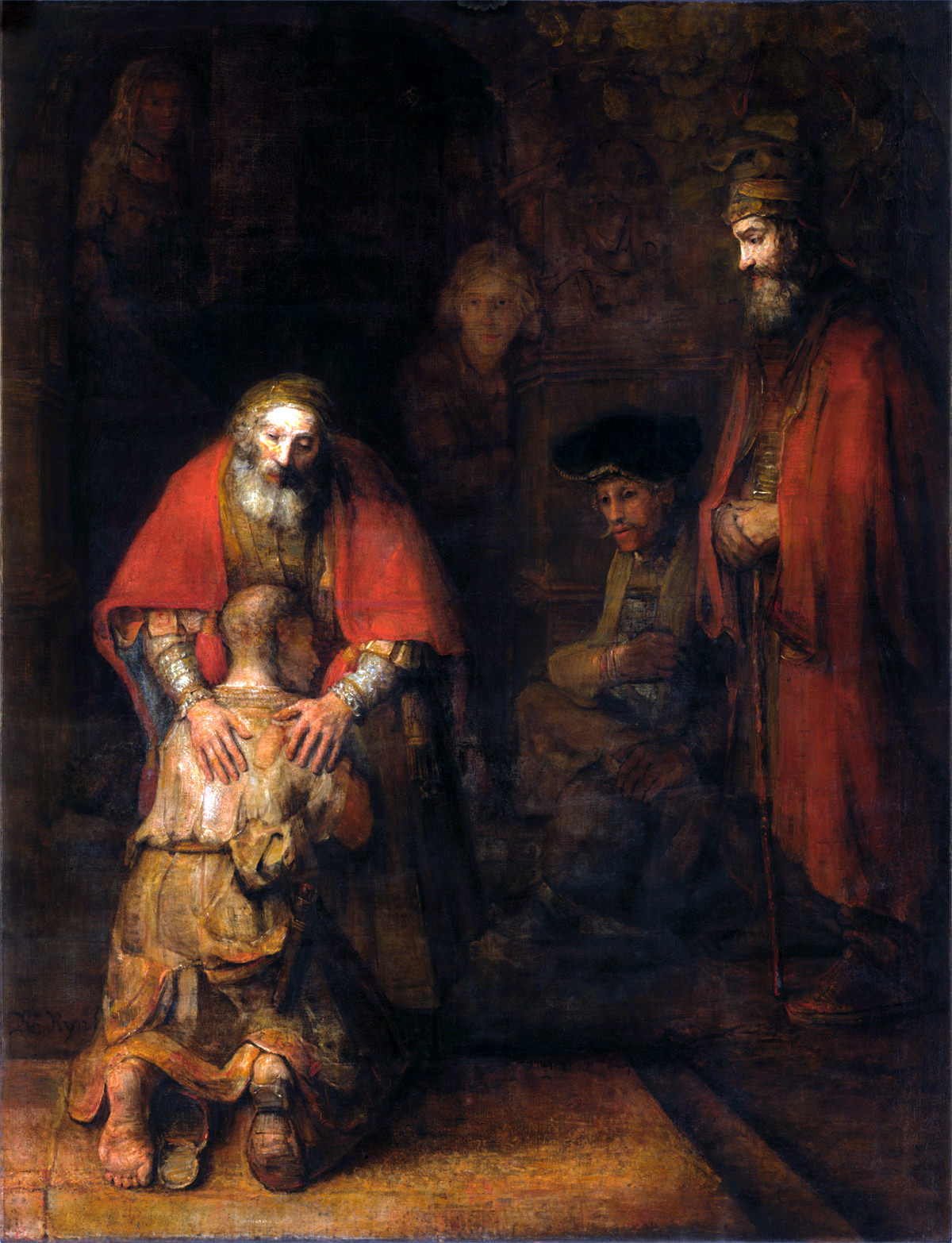
The Return of the Prodigal Son
by Rembrandt van Rijn1
What is Yom Kippur?
Yom Kippur (the Day of Atonement) is one of two Jewish High Holy Days. The first High Holy Day is Rosh
Hashanah (the Jewish New Year). Yom Kippur falls ten days after Rosh Hashanah on the 10th of Tishrei, which is a Hebrew
month that correlates with September-October on the secular calendar.
The purpose of Yom Kippur is to bring about reconciliation between people and between individuals
and God. According to Jewish tradition, it is also the day when God decides the fate of each human being.
Although Yom Kippur is an intense holiday it is nevertheless viewed as a happy day. Why? Because if one
has observed the holiday properly by the end of Yom Kippur they will have made peace with others and with
God.
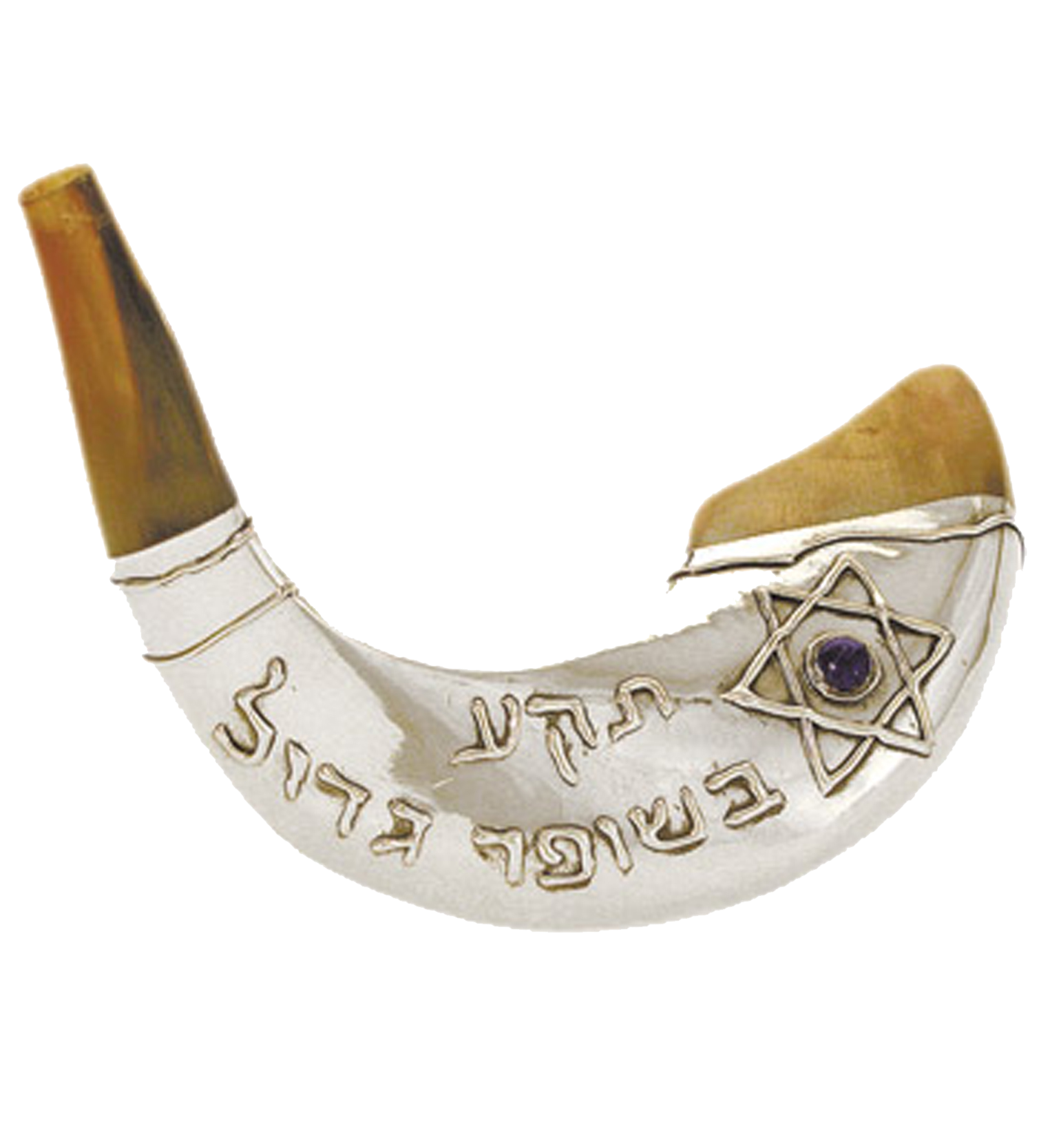
Jewish Ceremonial Horn2
Requirements of Yom Kippur
- Teshuvah (Repentance)
- Prayer
- Fasting
Teshuvah (Repentance)
Yom Kippur is a day of reconciliation, when Jews strive to make amends with people and to draw closer
to God through prayer and fasting. The ten days leading up to Yom Kippur are known as the Ten Days of Repentance. During
this period Jews are encouraged to seek out anyone they may have offended and to sincerely request forgiveness so that
the New Year can begin with a clean slate. If the first request for forgiveness is rebuffed, one should ask for forgiveness
at least two more times, at which point the person whose forgiveness is being sought should grant the request. The
rabbis thought it was cruel for anyone to withhold their forgiveness for offenses that had not caused irrevocable
damage.
This process of repentance is called teshuvah and it is a crucial part of Yom Kippur. Although many
people think that transgressions from the previous year are forgiven through prayer, fasting and participation in
Yom Kippur services, Jewish tradition teaches that only offenses committed against God can be forgiven on Yom Kippur.
Hence it is important that people make an effort to reconcile with others before participating in Yom Kippur services.
Prayer
Yom Kippur is the longest synagogue service in the Jewish year. It begins on the evening before Yom Kippur
day with a haunting song called Kol Nidre (All Vows). The words of this melody ask God to forgive any vows people have made
to God and not kept.
The service on the day of Yom Kippur lasts from morning until nightfall. Many prayers are said but one
is repeated at intervals throughout the service. This prayer is called Al Khet and asks for forgiveness for a variety of
sins that may have been committed during the year. The Jewish concept of sin is not like the Christian concept of original
sin. Rather, it’s the kind of everyday offenses like hurting those we love, lying to ourselves or using foul language that
Judaism views as sinful. You can clearly see examples of these infractions in the Yom Kippur liturgy, for instance in
this excerpt from Al Khet:
- For the sin that we have committed under stress or through choice;
- For the sin that we have committed in stubbornness or in error;
- For the sin that we have committed in the evil meditations of the heart;
- For the sin that we have committed by word of mouth;
- For the sin that we have committed through abuse of power;
- For the sin that we have committed by exploitation of neighbors;
- For all these sins, O God of forgiveness, bear with us, pardon us, forgive us!
When Al Khet is recited people gently beat their fists against their chests as each sin is mentioned.
Sins are mentioned in plural form because even if someone has’t committed a particular sin, Jewish tradition teaches
that every Jew bears a measure of responsibility for the actions of other Jews.
During the afternoon portion of the Yom Kippur service the Book of Jonah is read to remind people of
God’s willingness to forgive those who are sincerely sorry.
The last part of the service is called Ne’ilah (Shutting).The name comes from the imagery of Ne’ilah
prayers, which talk about gates being shut against us. People pray intensely during this time, hoping to be admitted
to God’s presence before the gates have been shut.
Fasting
Yom Kippur is also marked by 25 hours of fasting. There are other fast days in the Jewish calendar,
but this is the only one the Torah specifically commands us to observe. Leviticus 23:27 describes it as "afflicting
your souls" and during this time no food or liquid may be consumed.
The fast starts an hour before Yom Kippur begins and ends after nightfall on the day of Yom Kippur. In
addition to food, Jews are also forbidden from engaging in sexual relations, bathing or wearing leather shoes. The
prohibition against wearing leather comes from a reluctance to wear the skin of a slaughtered animal while asking
God for mercy.
Many people end the fast with a feeling of deep serenity, which comes from having made peace with
others and with God.